Property management is a business built on constant contact. Tenants call about a leaking tap on a Sunday evening. Landlords want an update on an overdue inspection. A new lease needs to go out before a settlement date. A compliance certificate is about to expire and nobody's noticed yet.
None of this stops just because your in-house team is stretched thin, on leave, or buried in paperwork. That's why more property management companies — from single-office residential agencies to larger commercial portfolio managers — are bringing in a virtual personal assistant (PA) to keep the wheels turning without the overhead of another full-time hire.
Here's what that support actually looks like, broken down for residential and commercial property management.
Residential portfolios run on volume — lots of tenants, lots of small requests, and a steady stream of admin that eats into a property manager's day. A virtual PA can take on multiple residential property management tasks:
Missed calls mean missed business — a prospective tenant who doesn't get an answer will just call the next agency. A virtual PA can handle incoming calls and enquiries, triage urgent maintenance issues from routine questions, and make sure nothing sits unanswered overnight or over a weekend.
Routine inspections, entry and exit inspections, and the reports that follow all need coordinating. A virtual PA can book inspection times with tenants and landlords, send reminders, chase confirmations, and get inspection reports formatted and filed so property managers can focus on the inspection itself rather than the diary work around it.
Rent reminders, maintenance updates, lease renewal notices, and general check-ins all need to go out consistently. A virtual PA can manage this communication cadence so tenants and landlords are kept informed without it falling to the bottom of a property manager's to-do list.
When a maintenance request comes in, someone needs to log it, get quotes, book a contractor, confirm access with the tenant, and follow up once the job's done. A virtual PA can run this whole loop, keeping a maintenance tracker up to date so nothing gets forgotten or double-booked.
Smoke alarm checks, insulation statements, healthy homes standards, and other regulatory requirements come with dates attached. A virtual PA can maintain a compliance calendar across a whole portfolio, flagging upcoming deadlines well before they become a problem.
Drafting and sending tenancy agreements, collecting signed copies, lodging bonds, and keeping records organised is time-consuming but has to be done properly every time. A virtual PA can manage this document flow from move-in to move-out.
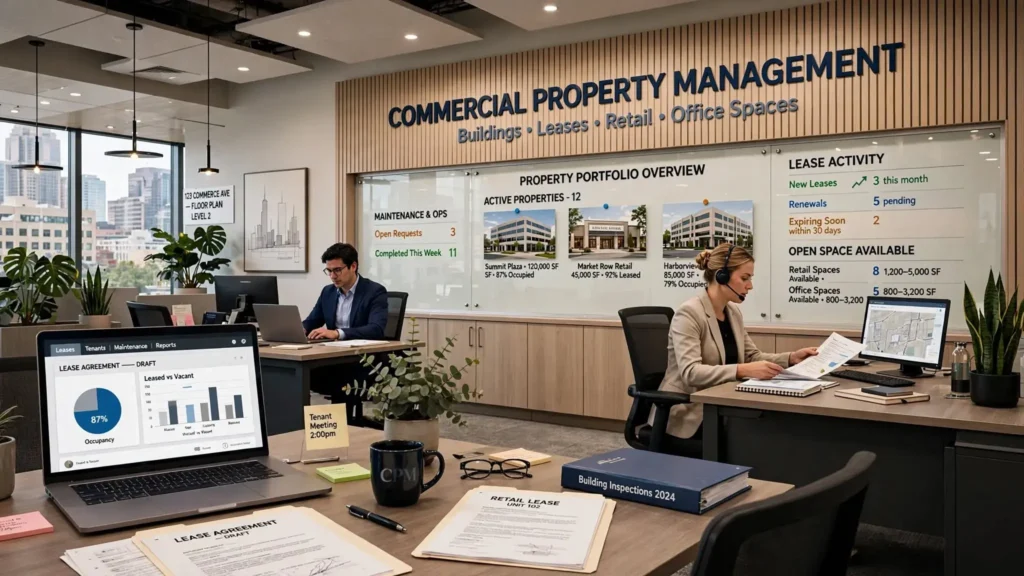
Commercial portfolios tend to involve fewer tenancies but higher stakes — longer leases, more complex terms, and tenants who expect a higher level of responsiveness. A virtual PA supporting commercial property management typically focuses on:
Commercial tenants often deal with facilities issues, access requests, or lease queries that need a prompt, professional response. A virtual PA can act as a first point of contact, managing correspondence and routing anything urgent to the right person quickly.
Commercial inspections often cover multiple tenancies, common areas, and building systems. A virtual PA can coordinate inspection schedules across a site or portfolio, liaise with facilities contractors, and keep inspection records and reports organised.
Commercial properties usually involve a wider range of contractors — for building services, fire systems, lifts, HVAC, and general upkeep. A virtual PA can manage service schedules, track outstanding works, and keep a log of contractor communications and invoices.
Commercial compliance is more layered — building warrants of fitness, fire safety certification, insurance renewals, and lease-specific obligations all need tracking. A virtual PA can maintain a master compliance and key-dates register so renewals and inspections never get missed.
Commercial leases involve more detailed documentation — rent reviews, outgoings reconciliations, renewal options, and variations. A virtual PA can support the admin side of this: tracking key dates, preparing correspondence, and keeping lease files current, while the property manager handles the negotiation and decision-making.
Commercial property owners often expect regular reporting on occupancy, arrears, and maintenance status. A virtual PA can help pull this together on a consistent schedule.
In both residential and commercial settings, the pattern is the same: property managers are trained and paid to manage relationships, solve problems, and make judgement calls — not to spend their day on scheduling, data entry, and chasing paperwork. A virtual PA takes on the repeatable, process-driven work that still has to happen, freeing up property managers to focus on the parts of the job that actually need their expertise.
It also scales in a way that hiring doesn't. A growing portfolio doesn't always need a full-time in-house admin hire — it often just needs more hours of the right kind of support, which a virtual PA arrangement can flex to match.
If your property management business is feeling the strain of admin, communication, and compliance tracking piling up, a virtual PA can be brought in for exactly the tasks that are taking up the most time — whether that's answering calls, coordinating inspections, chasing repairs, or keeping compliance dates on track. Support can be tailored to residential portfolios, commercial portfolios, or a mix of both, and scaled up or down as your business needs change.