If you run a transport, courier, or logistics business in New Zealand, you already know that keeping vehicles on the road is only half the job. The other half is the paperwork behind them — registrations, Warrants of Fitness, Road User Charges, driver licences, service schedules — all of it needing to be tracked, renewed, and filed correctly, on time, every time.
That ongoing process is called fleet management, and for small and mid-sized NZ fleets, it's often the single biggest source of admin overload. This guide explains what fleet management actually involves, why it matters more in New Zealand specifically, and how outsourcing the admin side to a virtual PA can free up hours every week without the cost of hiring in-house office staff.
Fleet management is the ongoing process of overseeing a company's vehicles — and the people who drive them — from the day they're acquired through to the day they're sold or retired. It's not one task but a set of interlocking responsibilities that keep a fleet legal, safe, and cost-efficient:
Larger fleets often manage this through telematics platforms and GPS tracking systems, which handle real-time vehicle location, driver behaviour monitoring, and automated compliance alerts. But underneath any software, someone still has to make sure the underlying paperwork, dates, and records are accurate — and for a lot of small and mid-sized operators, that's the part that quietly falls through the cracks.
New Zealand has its own specific compliance framework that fleet operators need to work within, and it's more involved than in many other countries:
Missing any one of these isn't just a minor admin slip — it can mean fines, a vehicle taken off the road, insurance complications, or liability exposure if something goes wrong. For a business running even a handful of vehicles, tracking all of this manually across spreadsheets, inboxes, and sticky notes becomes a real risk.
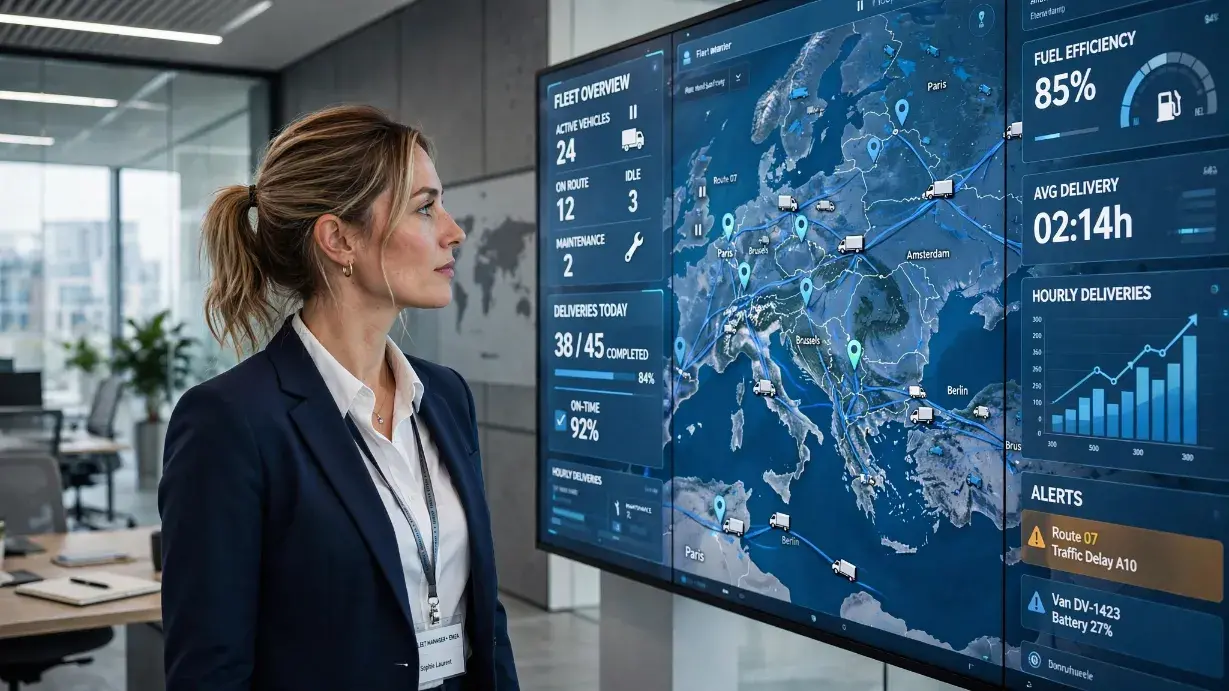
There are excellent fleet telematics and GPS tracking providers in the New Zealand market that automate a lot of this — real-time vehicle tracking, automated RUC purchasing, digital WOF/COF/rego sync, driver behaviour scoring, and fuel fraud detection. If you're running a large fleet, that kind of platform is often worth the investment.
But software alone doesn't solve everything. Someone still needs to:
For small and mid-sized fleets — owner-drivers, courier businesses, and growing logistics operators — a full telematics platform can be more than they need, and the administrative gap is often the bigger, more urgent problem. That's where outsourced fleet administration comes in.
A virtual PA doesn't replace a GPS tracking system — they cover the administrative layer that sits around your fleet, whether or not you have telematics software in place. Typical fleet management admin support includes:
1. Compliance and renewal tracking
Maintaining a running calendar of WOF, COF, registration, and RUC renewal dates, and following up with drivers or workshops before anything lapses — so you're never caught out by an expired warrant or an overdue RUC top-up.
2. Vehicle records management
Keeping a single, organised record for every vehicle in the fleet: service history, ownership documents, insurance details, and incident reports — so information is one search away instead of scattered across emails and folders.
3. Driver licence and certification administration
Tracking licence expiry dates and endorsements across your driver roster, and flagging renewals early enough that a driver is never accidentally operating without the right licence class.
4. Maintenance scheduling
Booking vehicles in for routine servicing, following up with garages and mechanics, and keeping a record of what's been done and what's due next.
5. Reporting
Pulling together clear spreadsheet or dashboard summaries of fleet status, upcoming renewals, and outstanding issues — so the business owner or fleet manager can see the full picture at a glance instead of chasing it down.
6. General liaison
Acting as the point of contact between drivers, workshops, insurers, and any NZTA-related paperwork, so admin doesn't get stuck waiting on the business owner to have a spare five minutes.
This kind of support pairs naturally with the other administrative pressure points transport and logistics businesses face day to day — dispatch coordination, invoicing, accounts follow-up, and customer communication — all of which a virtual PA can typically pick up alongside fleet admin.
You're likely due for outsourced fleet admin help if:
What does fleet management actually involve?
Fleet management covers everything from vehicle compliance (WOF, COF, rego, RUC) and maintenance scheduling to driver licensing, cost control, and record-keeping across a vehicle's entire lifecycle.
Do I need fleet management software if I use a virtual PA?
No. A virtual PA can manage fleet admin manually or work within whatever software or systems you already use — telematics platform, spreadsheet, or otherwise.
Can a virtual PA track WOF, COF, and RUC renewal dates?
Yes. This is one of the most common fleet admin tasks a virtual PA takes on — maintaining a renewal calendar and following up before anything lapses.
Is this suitable for a small fleet or owner-driver?
Yes. Outsourced fleet admin scales down as easily as it scales up, making it well suited to owner-drivers and small fleets that don't need (or can't yet justify) a full telematics platform.
How is this different from a fleet tracking or telematics provider?
Telematics platforms handle real-time GPS tracking, automated compliance syncing, and driver behaviour monitoring through hardware and software. A virtual PA handles the administrative layer around that — records, renewals, scheduling, and reporting — whether or not you have a telematics system in place.
If fleet compliance and admin are eating into time you'd rather spend running your business, a virtual PA can take the day-to-day tracking, renewals, and record-keeping off your hands — without the cost or commitment of hiring in-house.
Get in touch for a free consultation to talk through what fleet admin support could look like for your business.