For trades and construction businesses, every enquiry represents a potential job. Whether it arrives through a phone call, email, website form, or social media message, a customer reaching out is usually looking to hire someone.
However, many trades businesses struggle to keep up with incoming enquiries while managing work on-site. Builders, electricians, plumbers, and contractors often spend most of their day on projects, making it difficult to respond quickly to calls, emails, and messages.
While this challenge is common across the industry, the consequences are often underestimated. Missed or delayed responses can lead directly to lost projects, reduced revenue, and missed opportunities for growth.
Understanding the true cost of missed leads can help trades businesses build better systems for capturing and responding to customer enquiries.
Unlike many office-based businesses, trades companies operate in environments where communication can be difficult during working hours. A contractor may be on scaffolding, working with tools, coordinating a team, or travelling between job sites.
During this time, enquiries can arrive through multiple channels:
Without dedicated administrative support, these enquiries may remain unanswered for hours or even days.
Often the intention is to respond later, but the reality of a busy work schedule means enquiries can easily be overlooked.
When someone needs a trade service—whether it is a renovation, repair, or installation—they rarely contact just one contractor.
Most customers will reach out to two or three businesses at the same time, choosing the contractor who responds first and communicates clearly.
For example, a homeowner needing urgent plumbing work may send emails to several plumbers and call another. If one contractor responds quickly while another replies two days later, the job will almost always go to the faster responder.
In this way, even small delays can result in lost projects.
Every missed or ignored enquiry represents potential revenue.
Consider a simple example:
Over the course of a year, this could represent $300,000 – $700,000 NZD in missed opportunities, depending on the type of work and conversion rate.
While not every enquiry turns into a confirmed job, improving response times can significantly increase the number of projects secured.
For many small and medium trades businesses across New Zealand, capturing just one or two additional projects each month can make a substantial difference to annual revenue.
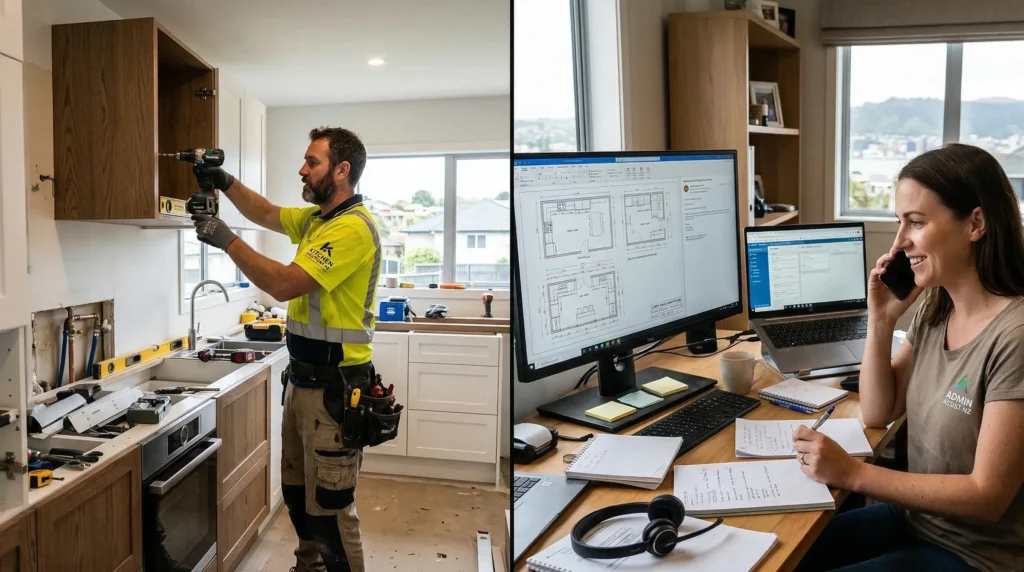
Even when enquiries are captured, delays in preparing quotes can still lead to lost opportunities.
Trades businesses frequently receive multiple requests for estimates each week. Preparing quotes takes time—reviewing project details, calculating materials, and arranging site visits.
If quotes are delayed, customers may choose another contractor who provides a faster response.
Clients generally prefer businesses that:
If a quote arrives days after competitors have already responded, the opportunity may already have been lost.
Many trades business owners manage both operational and administrative responsibilities. In addition to completing work on-site, they must also handle tasks such as:
This administrative workload can quickly become overwhelming, particularly for small businesses without office staff.
As a result, responding to new leads sometimes becomes a lower priority—even though it is essential for business growth.
Today’s customers expect businesses to respond quickly to enquiries. When potential clients send an email or message and receive no reply, they may assume the business is:
This perception can damage trust before the business even has an opportunity to engage with the customer.
For trades businesses that rely heavily on reputation and referrals, responsiveness can play a crucial role.

Trades businesses that consistently secure new projects often have clear systems in place to manage incoming enquiries.
These systems may include:
Having reliable processes helps ensure that no enquiry goes unanswered.
Many trades businesses are now using outsourced administrative support to manage customer enquiries and communications.
Administrative professionals can assist with tasks such as:
This support allows trades professionals to focus on their work on-site while ensuring that potential clients receive timely and professional communication.
Businesses seeking support tailored to the sector can explore services such as virtual assistant support for trades and construction businesses, which helps ensure enquiries are handled efficiently.
Every phone call, email, or message from a potential customer represents an opportunity. Capturing and responding to those opportunities quickly can have a direct impact on business success.
By improving how enquiries are managed, trades businesses can:
Often, the difference between winning and losing a job is not price or expertise—it is simply how quickly and professionally the business responds.
Missed calls, unanswered emails, delayed quotes, and overlooked messages can quietly cost trades businesses valuable work. While these challenges are common in the industry, they are also avoidable.
With better systems, a reliable phone answering service, or a virtual receptionist handling enquiries, trades businesses can ensure that every potential lead receives prompt attention.
Capturing and responding to enquiries effectively not only improves customer experience but also creates more consistent opportunities for growth.
In a competitive market, responsiveness can be one of the most powerful advantages a trades business can have.