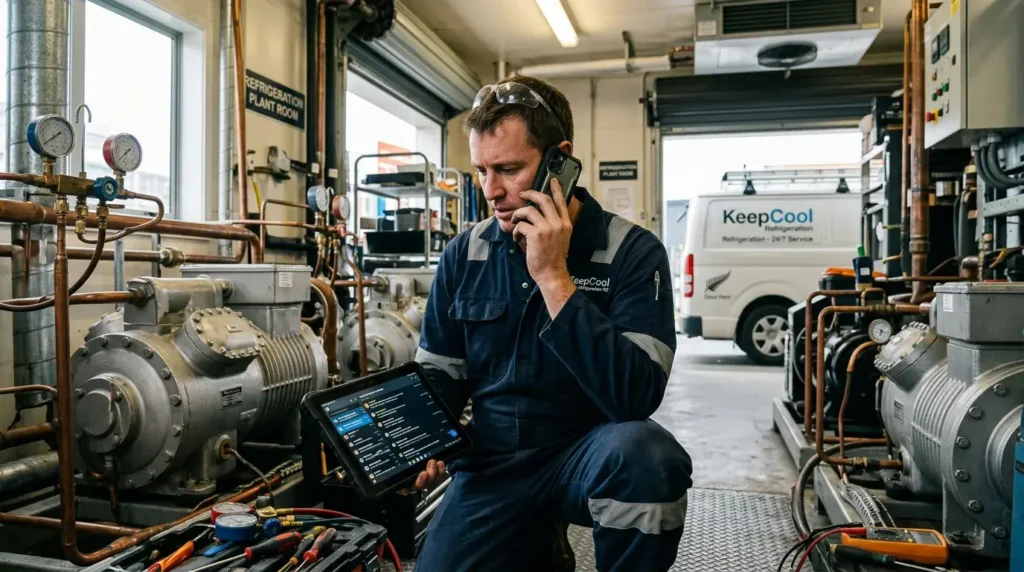
The life of a refrigeration and HVAC engineer—affectionately known across New Zealand and Australia as a "Fridgy" or "Fridgie"—is defined by technical precision, physical endurance, and long hours. Whether they are scaling roofs in the height of summer to repair commercial air conditioning units or navigating complex plant rooms to maintain critical refrigeration systems, these professionals are the unsung heroes keeping the country cool and compliant. However, while their technical skills are highly honed, many business owners in this sector find themselves overwhelmed by a completely different kind of pressure: the administrative burden.
As the New Zealand HVAC/R industry becomes increasingly regulated and competitive, the sheer volume of paperwork, scheduling, and compliance tracking has grown exponentially. For many "Fridgies," the transition from being "on the tools" to managing a business introduces a steep learning curve. This article explores the specific administrative pain points faced by HVAC and refrigeration professionals in New Zealand and details how partnering with a New Zealand-based Virtual Personal Assistant (Virtual PA) can alleviate these struggles, allowing business owners to focus on growth and technical excellence.
The daily operations of an HVAC/R business involve far more than just fixing machinery. Behind every successful job is a trail of administrative tasks that, if neglected, can severely impact profitability and compliance. Based on industry forums, professional associations like the Institute of Refrigeration, Heating and Air Conditioning Engineers of New Zealand (IRHACE), and the general experiences of tradespeople, several key administrative struggles consistently emerge.
Perhaps the most significant administrative hurdle unique to the HVAC/R industry is the strict regulatory environment surrounding refrigerant handling. In New Zealand, the management of ozone-depleting substances and synthetic greenhouse gases is governed by the Ozone Layer Protection Act 1996 and the Climate Change Response Act 2002. Engineers are legally required to maintain meticulous records of refrigerant usage, recovery, and disposal.
Furthermore, maintaining professional standing often requires tracking Continuous Professional Development (CPD) points and managing documentation for Independent Qualified Professional (IQP) and Producer Statement Author (PSA) status. For a technician who has spent ten hours on site, returning home to log refrigerant weights and update compliance registers is a daunting and often delayed task.
HVAC and refrigeration work is inherently unpredictable. While routine maintenance can be scheduled weeks in advance, emergency breakdowns—such as a supermarket freezer failing or a server room overheating—demand immediate attention. Balancing these urgent call-outs with existing commitments requires constant logistical adjustments.
In New Zealand, where geographical spread and travel times between jobs can be significant, inefficient scheduling directly translates to lost revenue. Business owners often struggle to optimise their routes and manage customer expectations while simultaneously diagnosing complex mechanical faults on site.
Cash flow is the lifeblood of any trade business, yet financial administration is frequently cited as a major headache. "Fridgies" often find themselves quoting complex jobs late at night or on weekends, leading to delayed proposals and lost opportunities. Similarly, the process of invoicing for completed work, tracking supplier costs for specific parts, and chasing late payments can consume hours of unbillable time. When a business owner is focused on the technical aspects of the job, the financial administration often falls by the wayside, creating unnecessary stress.
When an engineer is deep inside a ceiling cavity or handling hazardous materials, answering a ringing phone is not just inconvenient; it is often impossible. Consequently, potential new leads are missed, and existing clients may feel neglected if their inquiries are not addressed promptly. In an industry where responsiveness during an emergency is a key competitive advantage, poor communication can severely damage a company's reputation.
 <
<
While the global market offers numerous offshore virtual assistant services, there is a distinct advantage to partnering with a Virtual PA based in New Zealand, particularly for trade businesses.
Understanding the local context is crucial. A New Zealand-based Virtual PA is familiar with the specific regulatory bodies, such as IRHACE and local city councils, and understands the nuances of local Health and Safety (H&S) requirements. They operate in the same time zone, ensuring real-time support during critical business hours without the friction of delayed communication. Furthermore, a local assistant understands the "Kiwi" business culture and communication style, which is essential for building rapport and trust with local clients and suppliers.
A specialised Virtual PA acts as an extension of the HVAC/R business, handling the back-office operations so the engineer can remain focused on revenue-generating work. The integration of a Virtual PA can transform a chaotic operation into a streamlined, professional enterprise.
| Area of Support | Specific Tasks Handled by a Virtual PA | Business Impact |
|---|---|---|
| Compliance Management | Logging refrigerant usage, tracking CPD points, preparing IQP/PSA documentation, and maintaining H&S registers. | Ensures legal compliance, reduces the risk of fines, and maintains professional accreditation without consuming the engineer's time. |
| Scheduling & Dispatch | Managing job management software (e.g., Fergus, Simpro), optimising travel routes, and coordinating emergency call-outs. | Maximises billable hours, reduces travel downtime, and improves customer satisfaction through reliable service times. |
| Financial Administration | Drafting quotes, generating invoices immediately after job completion, reconciling supplier invoices, and following up on accounts receivable. | Improves cash flow, ensures accurate job costing, and eliminates the burden of weekend paperwork. |
| Customer Experience | Answering inbound calls, qualifying leads, updating clients on technician arrival times, and managing email inquiries. | Captures new business opportunities, enhances professional image, and provides peace of mind to clients during emergencies. |
By taking over the management of industry-standard software platforms, an administrative assistant ensures that job data is captured accurately and in real-time. They can bridge the gap between the field and the office, ensuring that every part used is billed and every hour worked is accounted for.
For the New Zealand "Fridgy," the transition from a stressed technician to a successful business owner requires recognising the value of delegation. The administrative burden of compliance, scheduling, and financial management is a significant barrier to growth and personal well-being.
By partnering with a New Zealand-based Virtual PA, HVAC and refrigeration professionals can reclaim their evenings and weekends, ensure strict adherence to industry regulations, and provide a superior level of customer service. Investing in dedicated administrative support is not just a strategy for reducing stress; it is a fundamental step toward building a scalable, resilient, and highly professional trade business in the modern New Zealand market.